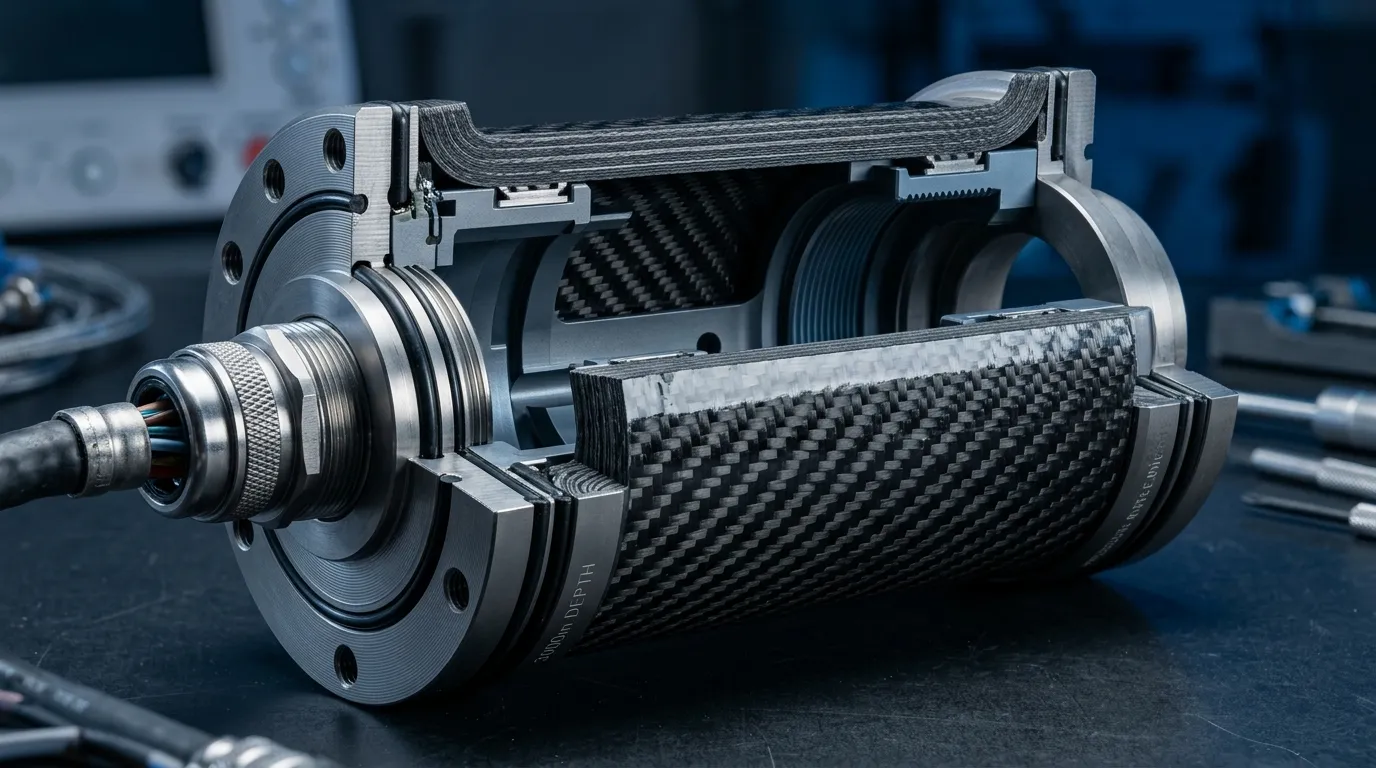
The design input is more than the operating depth
The target depth is the basic information for a housing, but it is not enough on its own. Internal pressure, water temperature, time spent underwater, number of dives and maintenance routine should also be defined. A sensor box that works permanently underwater and equipment that is opened and closed every day can have different requirements.
The difference between external pressure and the pressure inside the housing loads the body and end caps. The different densities of seawater and fresh water also affect the pressure at the same depth. In the design, the operating and test conditions should be stated clearly, not just an approximate depth.
Under external pressure, stability matters as much as strength
A thin body under external pressure may not be limited by material strength alone; buckling or loss of stability can also be decisive. Geometry, ovality, thickness variation and initial imperfections affect this behavior. That is why increasing wall thickness is not considered a sufficient solution to every problem.
The ply orientations of the composite laminate also play a role in behavior under external pressure. The body's axial and hoop stiffnesses, its connection to the end caps and its support should be considered together. A structure that performs well under internal pressure is not automatically suitable for external pressure of the same magnitude.
Seal selection cannot be separated from the groove and surface
An O-ring or another sealing solution is not complete just because a suitable material has been purchased. Groove geometry, compression, tolerances, surface condition and pressure direction are evaluated together. The seal material should be chosen to suit the water, the temperature and the other substances it contacts.
When the body or flange deforms under pressure, the gap in which the seal works can change. This movement can affect sealing or, if the clearance is unsuitable, cause the seal to extrude into the gap. The design should be checked against deformation in operation, not only against the dimensions at assembly. The details are determined together with the seal manufacturer's technical data.
End caps and cable penetrations are part of the pressure boundary
The clamping arrangement at the end cap connections affects the shape of the flange and the seal contact. Local loads transferred into the composite area should be evaluated separately around bolts or inserts. Tightening more than necessary does not always give better sealing; it can distort the body or the seal arrangement.
A cable penetration, connector, window or sensor fitting creates a new interface in the housing. A connector's stated depth rating does not prove that the composite assembly around it is suitable for the same conditions. The relevant interface needs to be verified together with the body. Environmental and galvanic compatibility are also considered where metal contacts carbon.
Sealing and structural verification answer different questions
A leak check under vacuum can help reveal some assembly defects. However, if the applied pressure differential and the body's behavior do not represent the real depth, this check is not proof of depth capability. Likewise, an internal pressure test does not on its own verify buckling behavior under external pressure.
External pressure, hold and cycle tests suited to the project's requirements should be planned with appropriate equipment and a competent test setup. The test scope, acceptance criteria and post-test inspection are defined in advance. A successful first use does not mean unlimited life for repeated dives or long-term water exposure.
The component and interface approach at Tulkas
Tulkas's marine and subsea work covers the design and production engineering of composite components. In housing projects, geometry, laminate, connections and environmental requirements are evaluated together. The depth target, verification responsibilities and any special tests required are clarified when the project scope is defined.
Frequently Asked Questions
Is choosing a waterproof material enough?
No. The body, end cap, holes and penetrations together form a pressure boundary. A part made from a suitable material can still take on water because of an incorrect seal groove or assembly. The evaluation should be made on the finished housing.
Can a vacuum test replace a depth test?
Usually not. The pressure differential and loading conditions of a vacuum check may not match the target depth. Leak screening and external pressure capability are different goals. Depth suitability should be verified under the relevant operating conditions.
Will tightening the bolts more stop a leak?
Uncontrolled tightening is not a lasting solution. It can distort the flange, crush the composite or push the seal out of its proper working range. The cause of the leak should be identified and the designed assembly conditions applied.
Is a housing that has been tested once reliable on every dive?
A single test does not prove the whole service life. Pressure cycles, water and temperature effects, seal maintenance and opening and closing affect the result. Accepted operating limits and maintenance intervals should be defined together with the verification plan.
Let's define your underwater component with the right requirements
Share the target depth, internal volume, connections, operating time and maintenance routine with Tulkas. Let's evaluate composite production and interface requirements together with a suitable verification scope.