The marine environment is not just a 'wet environment'
In marine applications, a composite part can be exposed simultaneously to water, salt, sunlight, temperature swings, impact, vibration and repeated loading. For this reason, directly carrying over a laminate that performs well in a land application to the marine environment is not correct.
Material selection should be based on whether the part operates above or below the waterline, whether it is continuously or intermittently wetted, what loads it carries, maintenance access, and its connection to metal parts.
Carbon fiber or glass fiber?
Carbon fiber, thanks to its high stiffness and low weight, is a strong option in applications such as hydrofoils, struts, masts, load-carrying arms and performance parts. However, cost, the visibility of impact damage and galvanic interaction with metal connections must be carefully managed.
Glass fiber is a more economical, electrically insulating material that offers sufficient strength for many marine structures. It is commonly preferred for large hulls and panel applications. Hybrid structures can combine carbon's stiffness with glass fiber's cost and impact advantage.
Resin system and water absorption
The environmental durability of a composite structure doesn't depend on fiber alone. The resin system protects the fibers and provides load transfer. An unsuitable resin can lose properties under prolonged water and temperature exposure, and micro-cracks can allow water to progress into inner regions.
Epoxy systems can be preferred for high adhesion and mechanical performance. Polyester and vinyl ester systems can offer advantages in terms of cost and production scale. The choice should be made together with service temperature, chemical environment, mechanical load and production method.
Sandwich structures and core selection
Sandwich structures are used in boat panels to achieve high bending stiffness with low weight. A lightweight core between two thin face sheets increases the section height, stiffening the panel.
The core material's density, water absorption, compressive strength and behavior at connection regions are important. Local high-density reinforcement is needed to prevent core crushing around bolts, inserts or hardware. Holes and edges must be sealed against water ingress.
Impact and hidden damage
A composite part with a small visible impact mark on the surface can develop delamination or core damage internally. Especially in carbon laminates, the outer surface may show limited signs while internal damage is more extensive.
In high-impact-risk regions, local glass fiber, tougher resin, a protective layer, a replaceable part or a hybrid laminate can be used. The design must account not just for nominal load, but for real-world use and maintenance mistakes as well.
Fatigue and repeated hydrodynamic loading
Parts such as propellers, hydrofoils and struts are exposed to variable loads with every revolution or every wave passage. Loads that would not cause failure in a single event can grow micro-damage when repeated over a long time.
In fatigue design, load spectrum, vibration, manufacturing defects and connection regions matter as much as maximum load. Mold joints, holes, sharp transitions and the area around inserts must be examined specifically.
Galvanic corrosion between carbon and metal
Carbon fiber is electrically conductive. In an electrolytic environment like salt water, direct contact between a carbon laminate and certain metals can create a risk of galvanic corrosion. The metal part can be rapidly damaged, or connection reliability can decrease.
Direct contact should be broken with an insulating glass fiber layer, coating, appropriate adhesive, sealing and correct metal selection. Connection details cannot be considered separately from material selection.
Tulkas' approach to marine composites
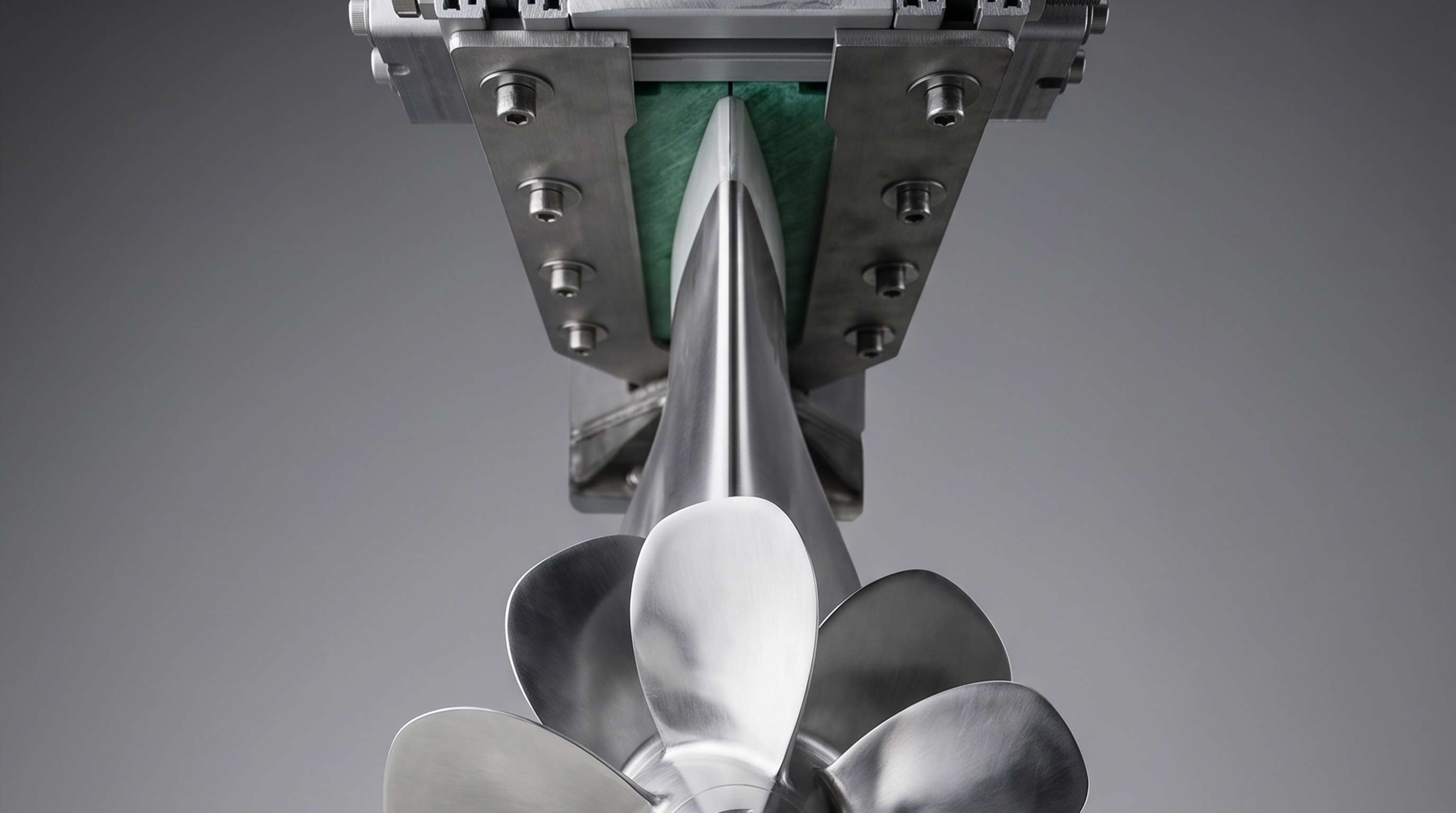
Tulkas addresses hydrofoils, struts, propellers, panels and special composite parts for marine and underwater applications together with the goals of low weight, stiffness, corrosion resistance and hydrodynamic form. Carbon, glass and hybrid structure options are evaluated according to the project's mission.
The production method, mold surface, connection regions and sealing are planned as early as the design stage. The goal is not just a part that will survive the sea, but a system component that will operate reliably throughout maintenance, assembly and its service life.
Frequently Asked Questions
Does carbon fiber rust in sea water?
Carbon fiber does not rust like metal, but the resin system, water ingress and galvanic interaction with metal connections must be carefully managed.
How is water absorption prevented in a composite part?
Appropriate resin, good lamination, sealed edges, watertight holes, surface coating and regular damage inspection are required.
Why is carbon preferred for hydrofoils?
A high stiffness-to-weight ratio helps thin hydrodynamic sections retain their shape under load. However, impact and connection design must be solved separately.
Conclusion
For a part that will operate in the marine environment, evaluate material, laminate and connection risks with Tulkas at the start of the design.