2023
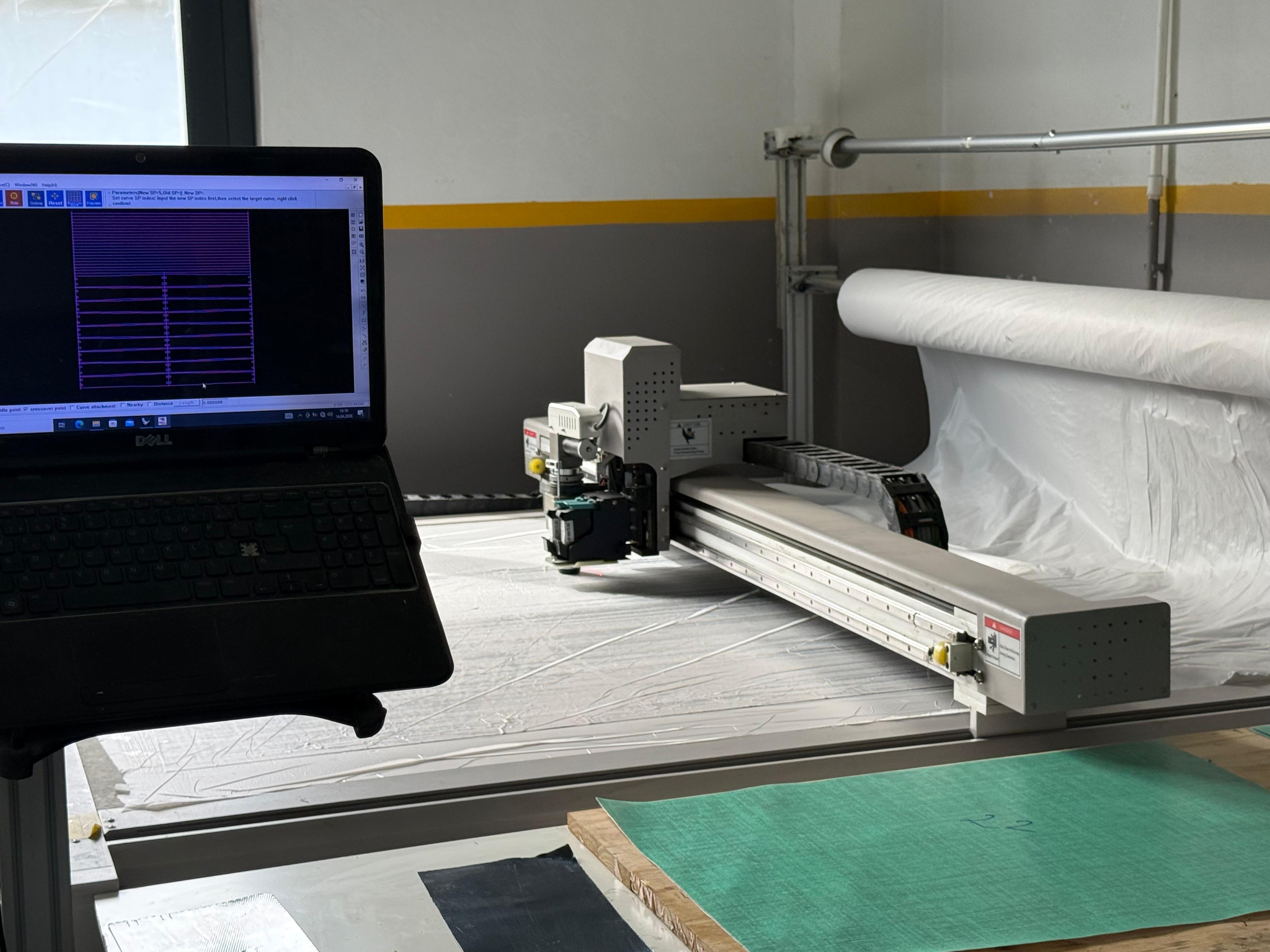
After moving to its 300 m² production facility in Sancaktepe, Tulkas expanded its machinery fleet in 2023 to respond to different product classes under the same roof. The goal was not to present method diversity as merely a theoretical capability, but to turn it into permanent production infrastructure capable of controlling critical parameters such as temperature, pressure, vacuum, duration and material preparation.
Hot-press molding infrastructure was developed for shaping materials such as prepreg, SMC and BMC under controlled temperature and pressure. These methods expanded production options for parts requiring short cycle times, mold-quality finish on both surfaces, and dimensional repeatability in series production.
Equipment supporting resin flow, consumable material placement, leak control and cure steps was added to the system for vacuum infusion and vacuum bagging processes. The goal was to monitor vacuum data and establish repeatable bagging methods for parts with large surface areas or targeting low void content.
The hand-layup process retained its flexibility for low-volume, large-geometry products, while being supported with auxiliary equipment to standardize material preparation, mixing, application and cure steps. This aimed to reduce the method's dependency on operator experience.
Post-cure infrastructure enabled controlled thermal cycles so the resin system used could reach its target temperature resistance and final properties. A vacuum-assisted polyurethane casting system was also added to the machinery fleet to remove air from the mixture and produce parts with lower void content in fine-detail molds.
The expansion of the machinery fleet allowed Tulkas to select a production method for different projects based on product requirements, rather than being tied to a single existing piece of equipment. Flexible methods could be used for prototypes and low-volume production, while a switch to shorter-cycle processes such as hot-press, SMC or BMC could be considered as quantity increased.
This diversity also provided an advantage at different stages of developing the same product. The first sample could be produced with a fast method to validate geometry and material; once a series production target was set, the mold, fixture and process parameters could be transferred to a more repeatable method. This allowed for more controlled decisions between design and production investment.
By selecting the appropriate composite process according to product geometry, performance target and production volume, Tulkas can build the entire production plan — from prototype to series production — within the same engineering approach.
Tulkas Establishes Production Infrastructure for Domestic Carbon Fiber Plate and Profile Demand
Tulkas Mühendislik established production infrastructure covering mold, process, cutting and quality control steps in 2024, aiming to meet domestic industry's carbon fiber plate and profile needs more quickly.